1. Overview
- Rotations are used to restructure or “balance” a tree when a node’s insertion or deletion violates the balancing rules
- They ensure that the height of the tree remains logarithmic (O(log n))
Are rotations the same for AVL and Red-Black Trees?
- Yes, both AVL and Red-Black Trees use the same types of rotations: Left Rotation, Right Rotation, Left-Right Rotation, and Right-Left Rotation.
- However, AVL Trees apply rotations more frequently (after every insertion or deletion), while Red-Black Trees apply rotations only to maintain color properties.
2. Types of Rotations
| Rotation Type | When It’s Used | Effect |
|---|---|---|
| Left Rotation | When a right-heavy subtree needs to be balanced. | Rotates left to shift nodes leftwards. |
| Right Rotation | When a left-heavy subtree needs to be balanced. | Rotates right to shift nodes rightwards. |
| Left-Right Rotation | When a node is right-heavy in the left subtree. | First a left rotation, then a right rotation. |
| Right-Left Rotation | When a node is left-heavy in the right subtree. | First a right rotation, then a left rotation. |
3. Left Rotation
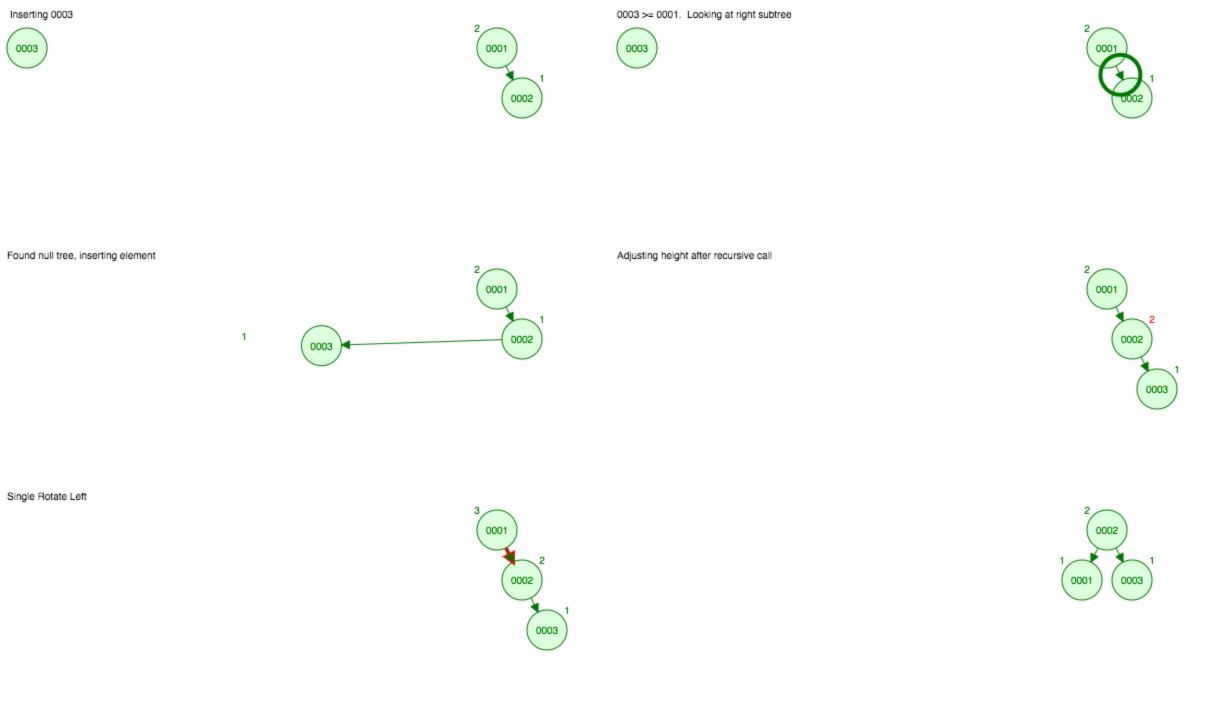
the left rotation shifts a node down to the left and lifts its right child up
Example
Logic / Pseudocode
-
Identify the nodes:
- Let 1 (
x) be the node we’re rotating left. - Let 2 (
y) be the right child ofx. 3is the right child ofy.
- Let 1 (
-
Reassign relationships:
x.rightis set toy.left.- In this example,
y.leftis null, sox.rightbecomesnull.
- In this example,
y.leftis set tox, makingythe new parent ofx.
-
Update the parent:
- If
xwas the root,ybecomes the new root (which is the case in this example). - If
xhad a parent (it doesn’t in this case), the parent ofxwould be updated to point toy.
- If
Implementation
AVLNode* leftRotate(AVLNode* x) {
    AVLNode* y = x->right;
    AVLNode* T2 = y->left;

    // Perform rotation
    y->left = x;
    x->right = T2;   // T2 referring to a temp pointer holding a subtree that would be otherwise lost during rotation

    // Update heights (only needed in AVL trees)
    x->height = max(height(x->left), height(x->right)) + 1;
    y->height = max(height(y->left), height(y->right)) + 1;

    return y;  // New root after rotation
}
4. Right Rotation Example
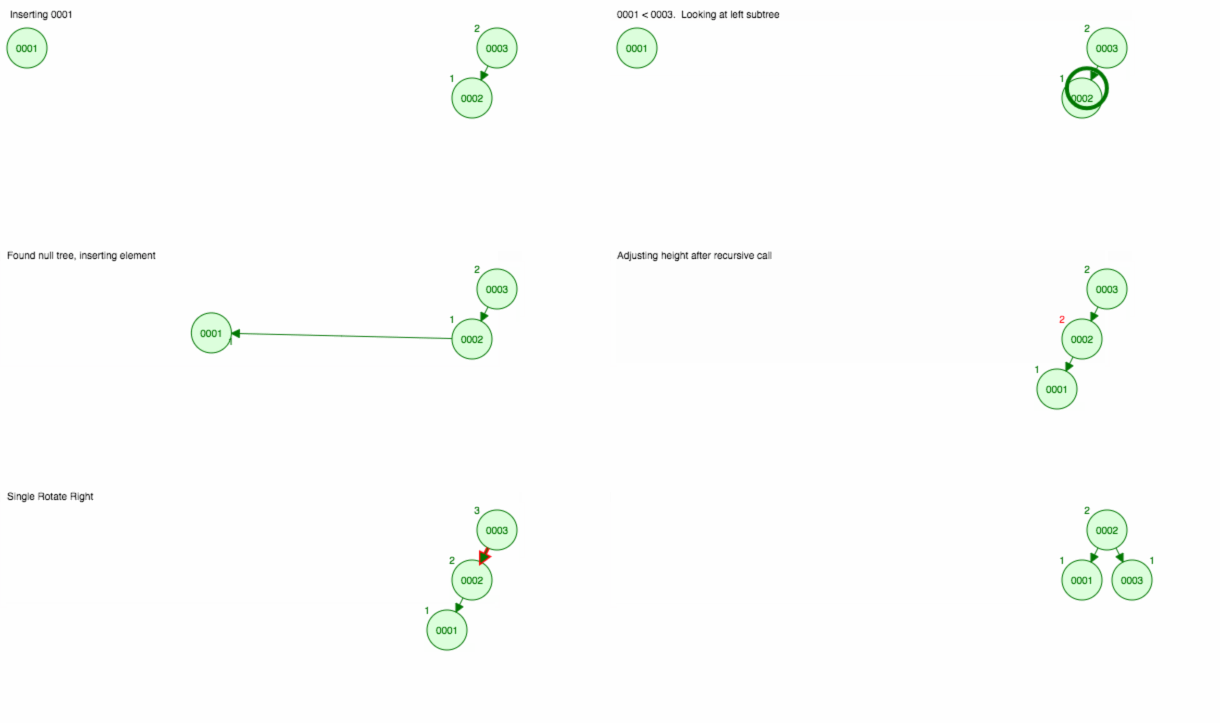
right rotation is the mirror of the left rotation, shirting a node down to the right and lifting its left child up
Example
Logic / Pseudocode
-
Identify the nodes:
- Let 3 (
y) be the node we’re rotating right. - Let 2 (
x) be the left child ofy. - 1 is the left child of
x.
- Let 3 (
-
Reassign relationships:
y.leftis set tox.right.- In this example,
x.rightis null, soy.leftbecomesnull.
- In this example,
x.rightis set toy, makingxthe new parent ofy.
-
Update the parent:
- If
ywas the root,xbecomes the new root. - If
yhad a parent (it doesn’t in this case), the parent ofywould point tox.
- If
Implementation
AVLNode* rightRotate(AVLNode* y) {
    AVLNode* x = y->left;
    AVLNode* T2 = x->right;

    // Perform rotation
    x->right = y;
    y->left = T2;   // T2 referring to a temp pointer holding a subtree that would be otherwise lost during rotation

    // Update heights (only needed in AVL trees)
    y->height = max(height(y->left), height(y->right)) + 1;
    x->height = max(height(x->left), height(x->right)) + 1;

    return x;  // New root after rotation
}
5. Left-Right Rotation Example
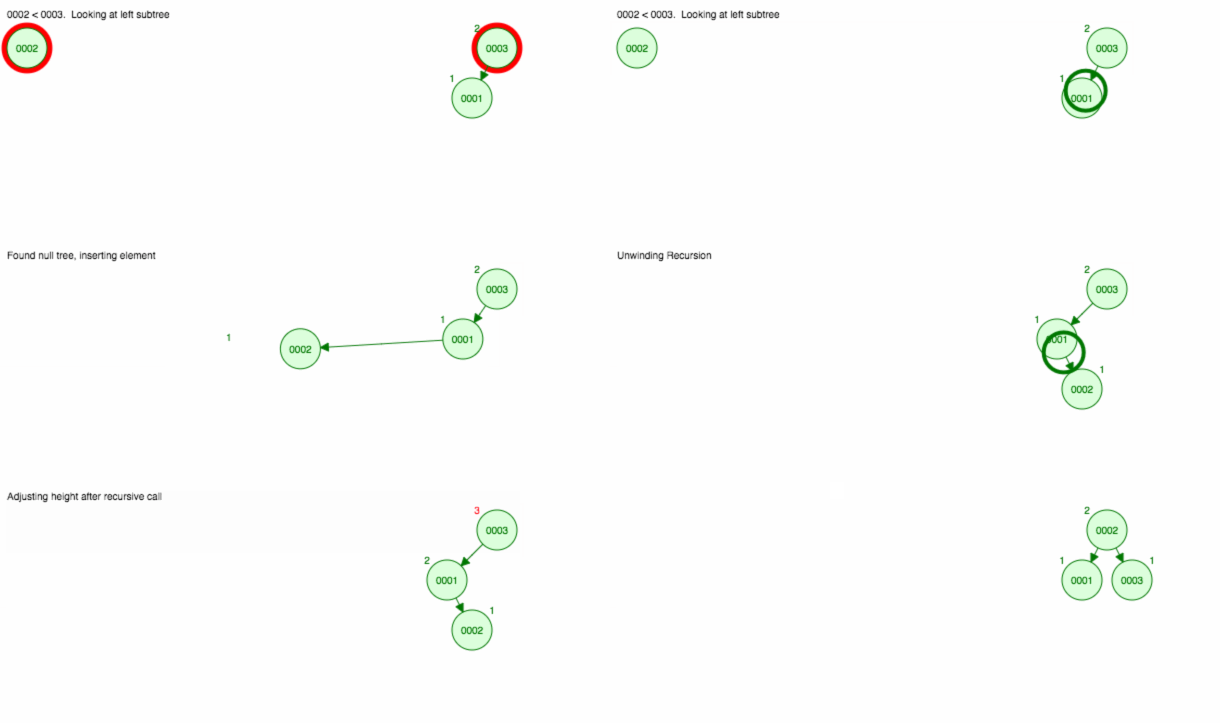
a double rotation where we first rotate left on the left child, followed by a right rotation on the root
Example
Logic / Pseudocode
-
Identify the nodes:
- Let 3 (
z) be the node causing imbalance. - Let 1 (
x) be the left child ofz. - Let 2 (
y) be the right child ofx.
- Let 3 (
-
Perform Two Rotations:
-
First Rotation:
- Perform a left rotation on node 1 (
x). - After the left rotation:
3 / 2 / 1 - Now node 2 is the new child of 3, and 1 becomes the left child of 2.
- Perform a left rotation on node 1 (
-
Second Rotation:
- Perform a right rotation on node 3 (
z). - After the right rotation:
    2
   / \
  1   3
- Perform a right rotation on node 3 (
-
-
Reassign relationships:
- After the left rotation,
x.rightis set toy.left(which is null). y.leftis set tox, andybecomes the new left child ofzin the right rotation.
- After the left rotation,
-
Update the parent:
- If
zwas the root,ybecomes the new root. - If
zhad a parent, it would be updated to point toy.
- If
Implementation of Left-Right Rotation
AVLNode* leftRightRotate(AVLNode* z) {
    // Step 1: Left rotate the left child of z
    z->left = leftRotate(z->left);

    // Step 2: Right rotate the node z
    return rightRotate(z);
}
6. Right-Left Rotation
a double rotation where we first right rotate on the right child, followed by a left rotation on the root
Example
Before rotation
      10
        \
         30
        /
       20
After right rotation on 30, followed by a left rotation on 10
      20
     /  \
    10   30
Implementation
AVLNode* rightLeftRotate(AVLNode* node) {
    node->right = rightRotate(node->right);
    return leftRotate(node);
}